
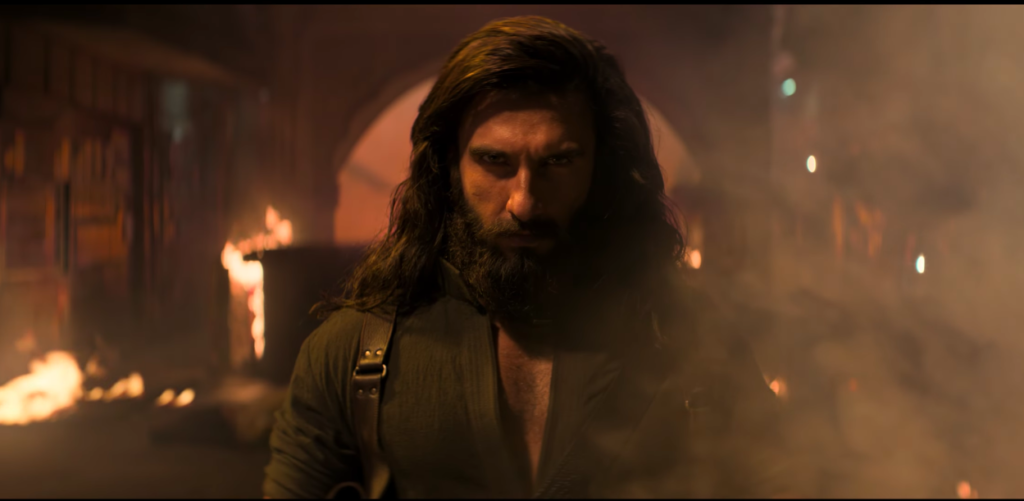
Introduction: The Paradox of a Perfect Trailer for an Empty Theater
The release of ‘Dhurandhar’ presented the industry with a genuine mystery. By all accounts, its promotional materials—from teasers to trailers—were exceptionally solid, promising a high-stakes, brutal spy thriller that should have generated massive audience hype. Instead, the film was met with a perfect storm of audience indifference: near-zero interest, alarmingly poor advance bookings, and theaters struggling to find an audience. While external factors, like a controversy involving star Ranveer Singh and the film Kantara, didn’t help, they can’t fully explain the disconnect.
This paradox is the kind of thing that keeps content strategists up at night. What happens when a film seems to do everything right on paper but fails to connect with its intended audience? Based on an in-depth review of the film, this post-mortem dissects the four most surprising and counter-intuitive takeaways from this ambitious but deeply flawed cinematic experiment.
——————————————————————————–
1. The Two-Part Gamble That Killed the Hype
One of the film’s biggest strategic mistakes, according to the review, was the decision to announce it as a two-part movie from the very beginning. This move proved to be a critical miscalculation of audience appetite and stands in stark contrast to the strategy behind a film like “Animal,” where a sequel was only greenlit after overwhelming public demand made it a commercial necessity.
For ‘Dhurandhar,’ this pre-emptive announcement had two damaging effects. First, it made the film’s lengthy 3-hour and 34-minute runtime feel unnecessarily stretched, giving the impression that a more focused story could have been told in a single, more concise film. Second, it fostered a sense of distrust. Audiences began to suspect that some of the most compelling scenes shown in the trailers were being deliberately held back for a second installment, a move that could easily make viewers feel scammed out of a complete cinematic experience.
2. The Unlikely Savior: A Soundtrack That Refused to Let the Movie Die
In a film marked by strategic flaws, the music, composed by Shashwat Sachdeva, emerged as its most unexpectedly brilliant and essential element. The soundtrack was described as feeling “like art,” featuring a huge variety of mashups, remixes, and clever uses of classic songs like “Hawa Hawa” and “Ramba Sambha” that gave the film a unique auditory texture.
The music wasn’t just an accompaniment; it was a lifeline. According to the review, it was the primary force that prevented the film’s long runtime from becoming intolerably boring for the audience. The score’s dynamic variations and raw energy injected life into scenes that might have otherwise dragged, holding the viewer’s attention when the narrative faltered.
“I won’t be ashamed to say this: if it weren’t for Shashwat Sachdeva’s music, some people might have walked out of the theater.”
The review even makes a specific prediction: a song featuring actor Akshay Khanna dancing to an Arabic beat is so well-executed that it is destined to go viral, much like the “Jamal Kudu” song from “Animal” did, cementing the soundtrack’s status as the film’s singular triumph.
3. The Scene-Stealer: How a Supporting Actor Became the Film’s True Star
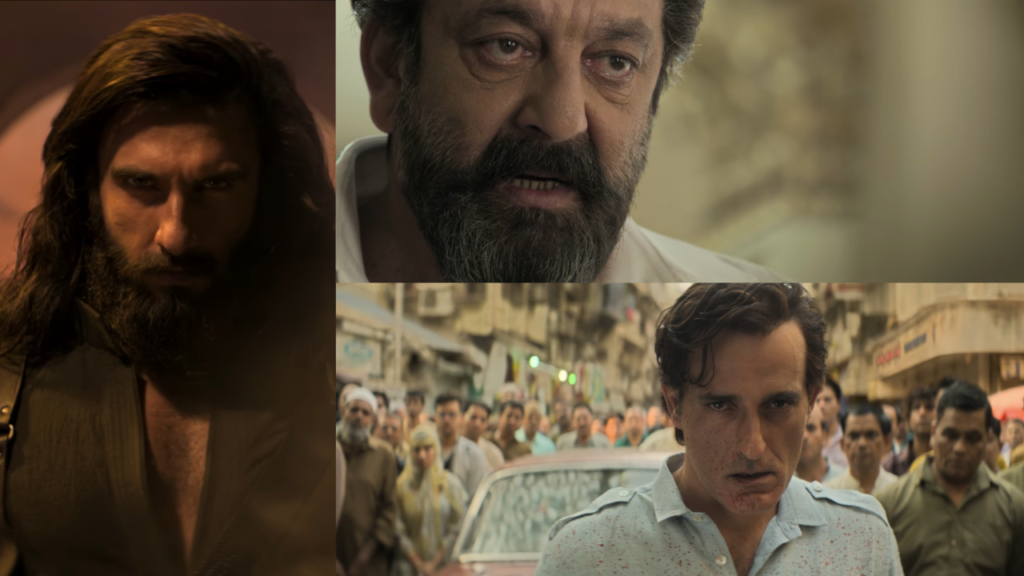
Despite a legendary cast featuring heavyweights like R. Madhavan and Ranveer Singh, the single most powerful and memorable presence in ‘Dhurandhar’ was supporting actor Akshay Khanna. According to the review, his performance possessed the “real aura” of the film, single-handedly elevating every scene he was in.
Even with a smaller role and despite his physically unassuming appearance—what the reviewer called a “5mm Akshay Khanna on a 70mm screen with sunken cheeks”—his screen presence was so magnetic that he felt like the true lead. The review praises the director’s intelligent handling of the character, noting that he was smart enough to let the actor “create noise in silence.” This allowed Khanna’s quiet, simmering intensity to become more powerful than any loud dialogue or explosive action, making him the film’s undeniable, if unofficial, star. The praise was so effusive, the reviewer declared, “bro, the guy honestly should have gotten an Oscar for the movie Tees Maar Khan.”
4. A “Masculine” Spy Film That Lacked a Knockout Punch
‘Dhurandhar’ was lauded for its bold attempt to redefine the Bollywood spy genre. It was a self-proclaimed “masculine film” that adopted a “solid, real, raw mode,” consciously breaking from tired tropes. It skillfully avoided the genre’s laziest pitfalls, where heroes and villains might “dance with each other and search for bikinis and bras.” Instead, it was praised for its brutal action, raw language, and a smart, fictionalized story based on the real contributions of India’s unsung spy heroes.
However, this is where the film’s central contradiction lies. Its raw, brutal tone set a clear expectation for a cathartic, high-voltage climax, but it ultimately failed to deliver the knockout punch. By the end, the audience is left without the sense of “complete satisfaction or revenge” that a film like “Uri” so effectively provided. Specific elements were blamed for this, with the reviewer noting that the “romance of Ranveer with Sara” particularly “dimmed” the film’s impact. ‘Dhurandhar’ became a collection of impressive components that never coalesced into a satisfying whole.
——————————————————————————–
Conclusion: A Brilliant Failure to Ponder
‘Dhurandhar’ stands as a fascinating paradox: a film brimming with brilliant, risky, and honest moments that, for a variety of strategic and narrative reasons, didn’t coalesce into a satisfying masterpiece. The reviewer’s final verdict of 3 out of 5 stars reflects this split identity, noting excitement for a potential Part 2 but with a stark warning: it must “come at 10 times the high voltage,” or it might not even get released. The film’s ultimate legacy, then, isn’t a simple question of success or failure, but a high-stakes cliffhanger for a sequel that must deliver on the promises its predecessor couldn’t keep.NotebookLM can be inaccurate; please double-check its responses.